
Until 24 January, 2021
Hungarian artist, Dora Maurer examines the perception of displacement in a playful and highly focused practice that finds inspiration in the sensations of everyday motion and change. The scope and diversity of her career will surprise you.
Two films at the entry to Dora Maurer’s exhibition at Tate Modern: Triolets, 35 mm film, 1981 and Relative Swingings, 16 mm film, 1973-5
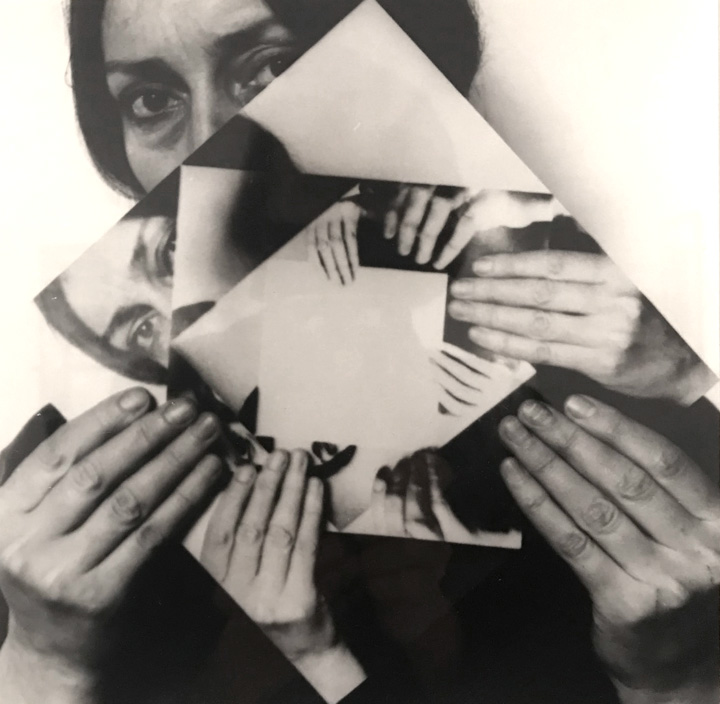
Displacement and orientation
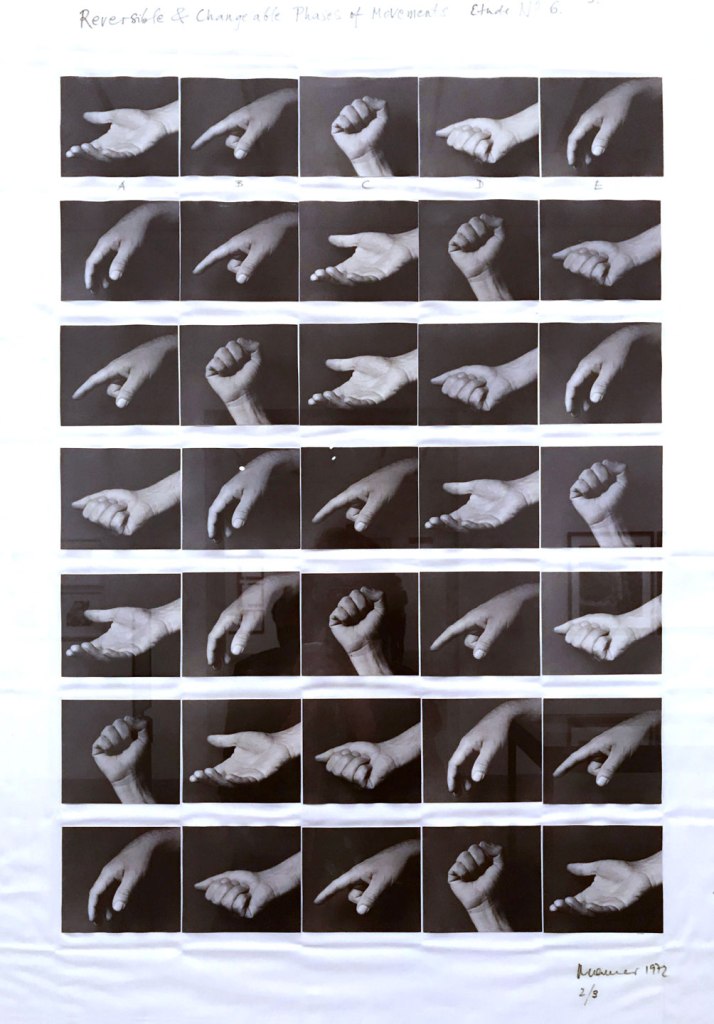
I went to Tate Modern to see the work of a Hungarian artist who paints in a flat and colourful graphic style. Hunting for Dora Maurer’s exhibition on the 3rd floor, I was confused to encounter a dark room of black and white experimental films followed by another filled with serial photography, printmaking, sculpture and drawing. Rushing through I found the paintings in a room further on, only to realise the entire body of work was Maurer’s. I had to go back to the beginning and start again to fully appreciate her thinking and method – finding the link between decades of creative output.
Seven Twists VI/IV, 1979/2011
Early career
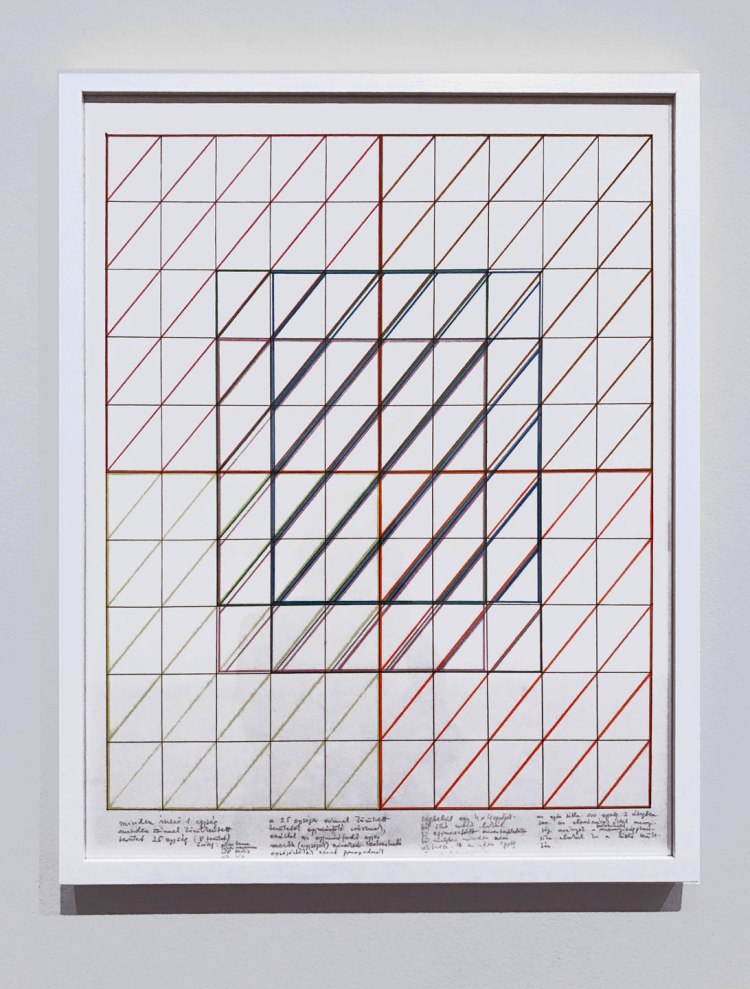
Maurer graduated as a Graphic Designer from the Hungarian Academy of Fine Arts in 1961. As she began her creative practice she joined forces with other artists in Hungary, during the years of communism in 60’s and 70’s. From 1975-77 Maurer collaborated with the musician/composer, Miklós Erdély on The Creative Practices Study Circle, initiating and exploring experimental art inquiries and processes. Maurer’s emphasis on geometric and math systems are a natural by-product of this time. Her exploratory nature led to her embrace of a wide range of media and forms. Her work takes the shape of scientific inquiry twinned with the playful approach of game designer.


Buchberg Castle
In 1982 Dora Maurer instigated a project that became a significant moment in her work. What began as an experiment in wrapping painted geometric patterns in architectural space became a proposal to directly paint a room in the empty and neglected Buchberg Castle, west of Vienna, with a ‘Projected Quasi-Image’. In 1983 this dream was realised and Maurer used the shape of a vaulted medieval room in the castle to host a complex interwoven geometric pattern that disrupts the viewer’s perception of the architecture. The success of this exhibition led to the castle’s role as a perpetual space for artists and creatives to explore new ideas. For more about Buchberg Castle and Maurer’s ‘Quasi-Image’ project go to their excellent website.
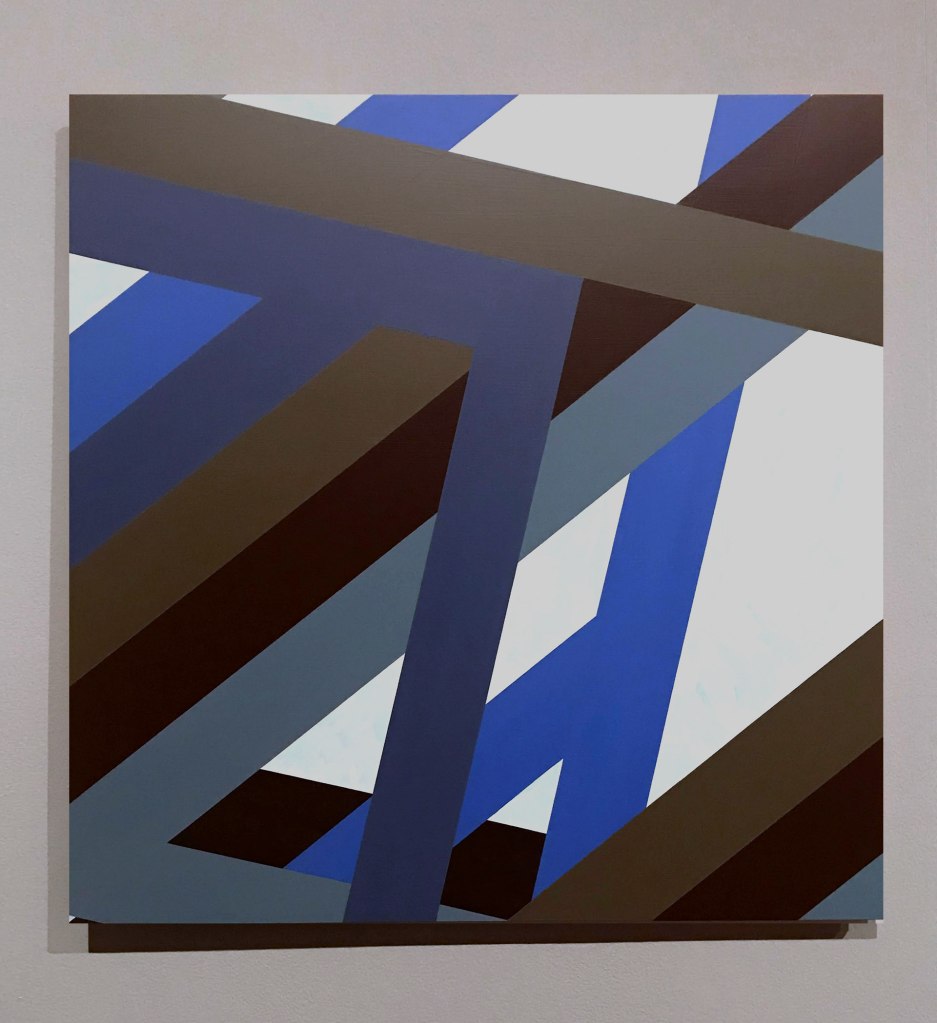
It is clear in the Tate show that this project is a critical juncture for Maurer. With graphic complexity and strong colour, there is an assertiveness and power that emerges post Buchberg.



Why see this show?
Dora Maurer’s work, especially the post-Buchberg phase, is visually arresting. However there is more to glean from this body of work. She has been following threads of artistic inquiry with a focus on very human perceptions of incremental change. There is a lot to take in here and reading the excellent curator’s notes mounted alongside the work will help. This is body of work created by an artist who was born and educated in an older version of Europe, divided by conflicting economic and social systems. The work has grown and adapted as Europe has changed. I am not sure that Dora Maurer would agree with my perception but it is tempting to think of the context – that these large shifts in history might have an impact on her work. Maurer’s work is methodical, scientific and playful all at the same time. And in the final room her work soars. A series of shaped paintings with overlapping layers seem to peel off the wall, ready to fly. It feels affirmative and hopeful in time when we really need more of this.

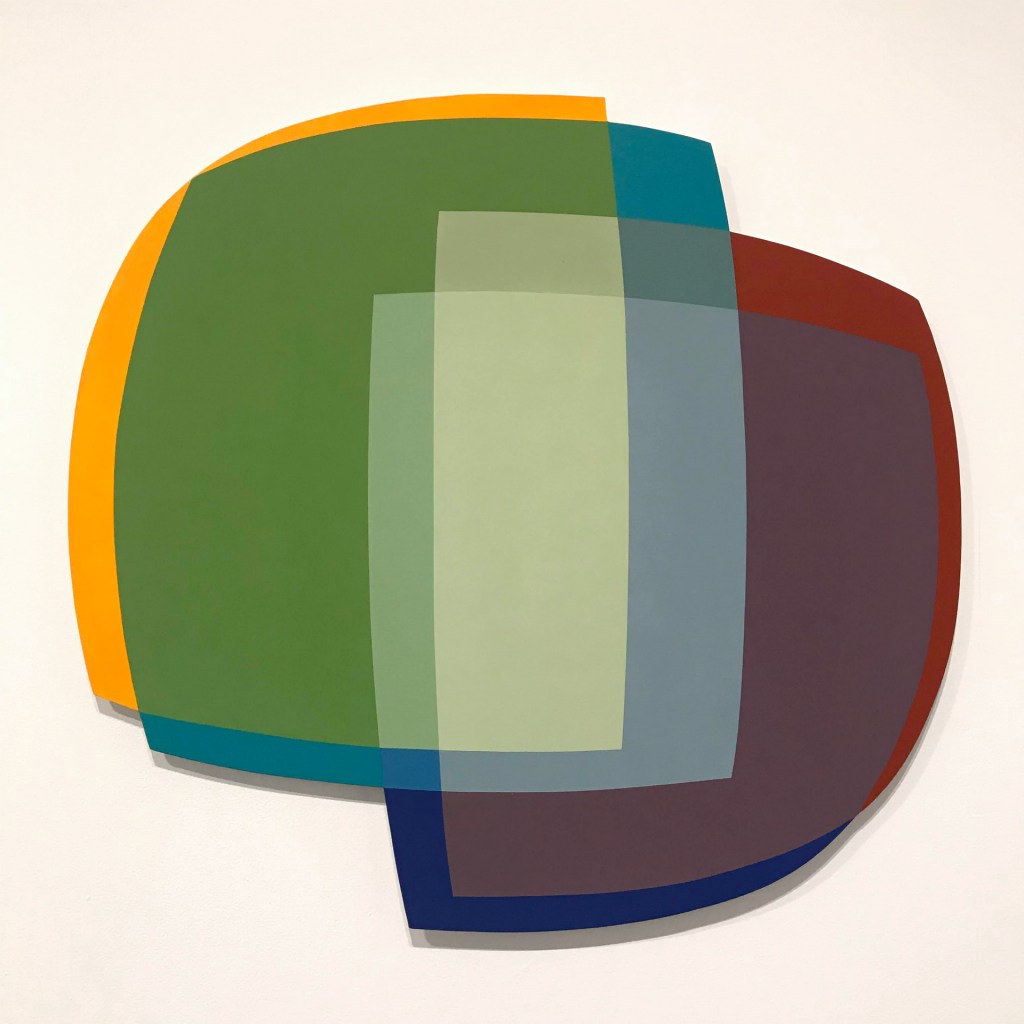

Dora Maurer at Tate Modern is open until 24 January, 2021.
Book free entry tickets and find out more about Dora Maurer here
https://www.tate.org.uk/whats-on/tate-modern/exhibition/dora-maurer
For more on Buchberg Castle https://www.kunstraumbuchberg.at/
Photography and video: Kristen Bjaastad
 ART FROM LONDON